
Most of us might already be familiar with the MCP (Model Context Protocol) and A2A (Agent-to-Agent) protocols presented by Anthropic and Google to standardize how agents communicate and work together to solve problems. Since many have focused on discussing the protocols themselves, exploring how they can complement each other to solve complex problems, I wanted to explore a real-world challenge that could benefit from this technology. While different LLM providers attempt to establish a standard communication protocol, let’s try to address some complex use cases using the communication protocol concepts available today.
Just a fair warning – This blog is a pure fictional work from my thoughts.
Among the basic needs for a human being, food is a primary need. This blog is a pure fiction on how this basic need can be fulfilled by the individual using the modern tech without having to rely on the mass production and also with little ease.
Let’s face it, the way many of us get our food feels increasingly fragile. Complex global supply chain challenges, climate uncertainty looms, and concerns about freshness and waste shadow the journey from distant farms to our forks. But what if the farm wasn’t miles away, but mere steps? What if technology could empower us, a family of four perhaps, to grow a significant portion of our own food, tailored precisely to our needs, with unprecedented ease?
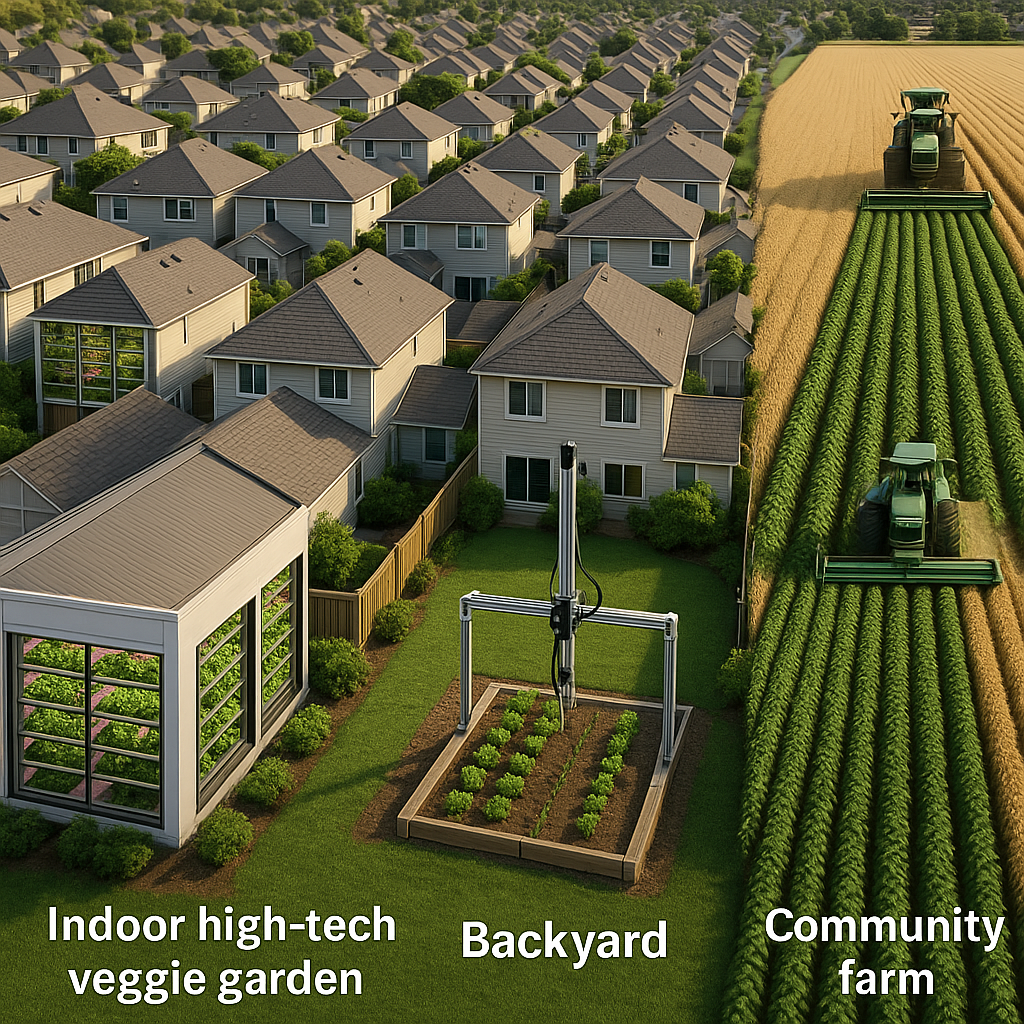
Welcome to a possible future of food supply – automated, personalized, and unfolding right within our homes and communities. Imagine a three-pronged approach to achieving greater food self-sufficiency and resilience, all powered by technology. How much of this story is science fiction, and how much is science fact available today? Let’s dive in.
Before diving into the specifics, let me briefly explain why I chose an advanced, self-sustainable farm-to-table system as the complex challenge to explore through the lens of A2A and MCP communication protocols. This particular problem is compelling for several reasons that highlight the need for standardized agent interaction:
a) Environmental Constraints: These systems don’t operate in purpose-built factories; the technology must adapt flexibly to diverse and often limited existing home spaces.
b) Market Fragmentation: The current market for indoor produce systems involves many niche providers, lacking broad standardization across hardware and software.
c) Hyper-Personalization: Unlike mass-produced goods, each home or kitchen garden setup needs to be highly unique, tailored to the specific dietary habits and preferences of the household.
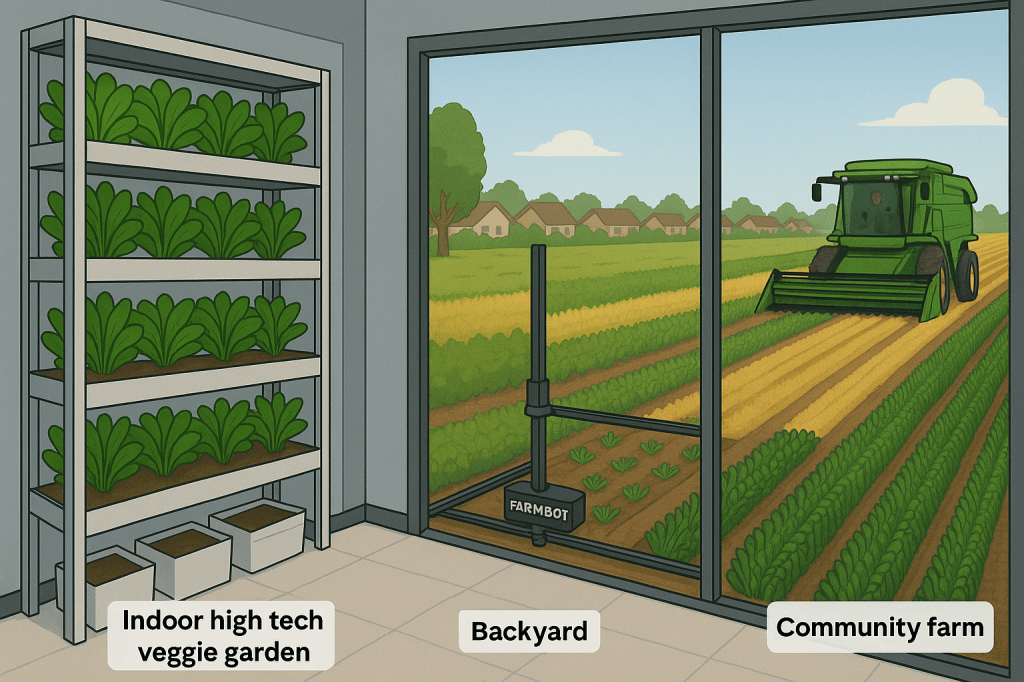
Throughout this fictional journey, we’ll touch upon how protocols like MCP and A2A could be the key to interoperability. Imagine them providing the ‘common language’ necessary for diverse technologies—sensors, robots, AI controllers—to communicate and cooperate seamlessly within these automated food systems.
1. The Indoor Oasis: Predictable Produce On Demand
The Vision
Imagine a dedicated space inside your home. It could be a converted closet, a small room, or sleek modular units lining a wall. This space acts as a high-tech vegetable garden; it’s Controlled Environment Agriculture (CEA) brought home. Using techniques like hydroponics or aeroponics, leafy greens, herbs, tomatoes, and peppers flourish vertically, bathed in optimized light, sipping precisely dosed nutrients, completely independent of the weather outside. This would be the fresh produce, harvested minutes before dinner, year-round.
The Tech Dream & Communication Network
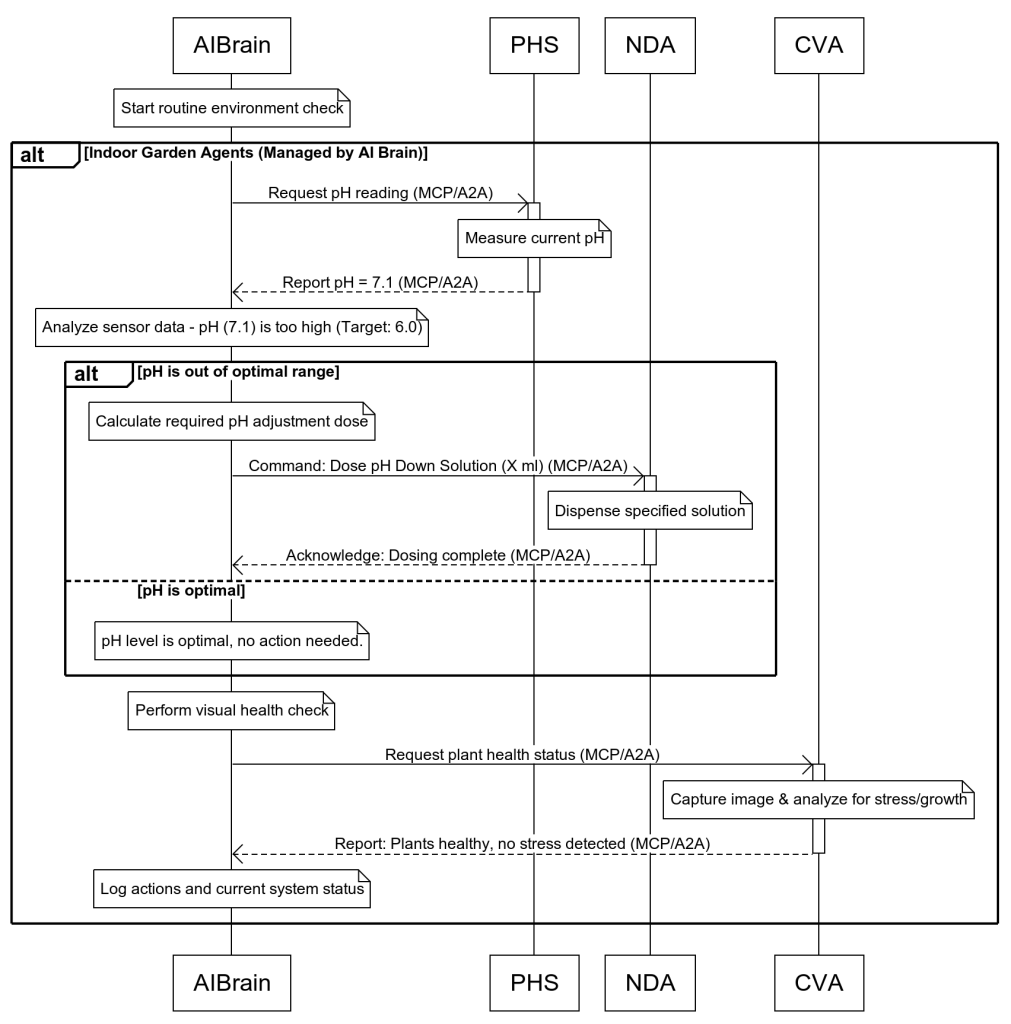
The technological dream involves full automation. Smart sensors act as diligent agents, constantly monitoring temperature, humidity, CO2, light, water pH, and nutrient levels. Automated systems, acting as actuator agents, adjust LED lighting spectra, dose nutrients, and manage airflow based on instructions from a central AI ‘brain’. This AI conductor analyzes data streams, optimizes conditions for each specific plant, predicts yields, spots stress or disease via computer vision often before we can, and even learns your family’s eating habits to adjust planting schedules, minimizing waste. Tiny robotic arms might even handle seeding, transplanting, and harvesting.
For this complex technological orchestra to play in harmony, seamless communication is key. Standardized communication protocols, potentially evolving from concepts like MCP and A2A, could become vital here. Imagine a central AI ‘brain’ agent effortlessly querying diverse sensor agents (‘Light Sensor, report PAR value’; ‘pH Sensor, what’s the reading?’), instructing actuator agents (‘Nutrient Doser, release X amount’; ‘LED Array, shift spectrum to Y’), and coordinating with a harvesting robot agent—all using a common, efficient language. The goal is to enable a garden equipped with technology and infrastructure from various vendors, all managed by a unified app acting as that central AI brain, leveraging protocols like MCP or A2A for seamless communication between every component.
Reality Check (Today vs. Tomorrow)
- Yes, You Can Start Now: Turnkey home hydroponic systems (Gardyn, Lettuce Grow, Rise Gardens, etc.) are readily available ($100-$1000+). They provide the structure, basic LED lights, and pumps with simple timers – enough to grow impressive amounts of greens and herbs. You can add smart plugs for app control and even integrate sensors in DIY setups.
- Limited: The sophisticated, adaptive AI control and affordable robotic harvesting/handling seen in the vision remain largely in the commercial or experimental realm for now. Linking your garden’s output to your smart fridge inventory automatically? Still science fiction.
Water, Seeds, AI & Farm-to-Table
Current systems manage water efficiently. Seed starting remains largely manual. Today’s AI role in home systems is minimal compared to the future vision of predictive management. Today’s Farm-to-table means you are harvesting the produce yourself when it’s ready.
Space Needs
Despite the current limitations, the space efficiency is real. Even with today’s tech, a system occupying just 2-100 square feet of floor space (using vertical height) can provide a substantial supply of fresh produce for a family of four.
2. The Smart Backyard: A Mix of Fruits, Tech, and Nature
Step outside into your potential backyard food source – ranging from a compact patio or balcony (100-500 square feet) to a generous lot of 2000-5000 square feet. Here, technology and nature can work together to provide a variety of fruits. Imagine two approaches co-existing:
(A) High-Tech Cultivation (Berries, Vines, Dwarf Trees)
For plants like berries, grapes, or dwarf fruit trees, especially in smaller or intensely managed areas, the vision involves significant technological assistance. Soil sensors track moisture, integrating with local weather data feeds. Automated drip irrigation delivers water with precision. The dream includes small, agile robots, perhaps evolving from concepts like FarmBot, navigating the space. Using computer vision and manipulators, these robotic agents could potentially handle precision pruning, targeted pest management (reducing chemical use), and gentle harvesting of ripe fruit from these smaller plants.
Coordination here is essential. An AI agent needs to process data from various sensor agents (soil, weather, cameras) and instruct actuator agents (irrigation controllers) and robotic agents. Standardized protocols like A2A and MCP become crucial for enabling this complex dialogue, ensuring efficient tasking and data exchange between the central AI manager and its specialized ground crew – especially if components come from different vendors.
(B) Lower-Tech Harvests (Larger Fruit Trees)
If your space allows (particularly in the 2000-5000 sq ft range), you could complement the high-tech beds with established, larger fruit trees like coconut, guava, mango, etc. These mature trees might require significantly less intensive automation. They could thrive largely on natural rainfall and ambient conditions, needing only occasional manual care. While technology isn’t absent – occasional soil moisture checks, drone/camera flyovers for health monitoring, or targeted smart irrigation during severe droughts could still be beneficial – they wouldn’t necessarily demand the constant robotic tending envisioned for the berry bushes or dwarf trees.
Reality Check (Across the Board)
- Yes: You can easily implement smart irrigation systems (like Rachio or Orbit B-hyve) linked to sensors and weather data – beneficial for both intensive beds and supplemental water to larger trees. Basic plot robotics like FarmBot ($3000+) can automate tasks in defined garden beds. Increasingly sophisticated robotic lawnmowers ($1000-$4500+) show progress in outdoor autonomous navigation.
- Limited: Versatile robots that can correctly prune your specific apple tree or gently harvest ripe fruit from any of these sources (berries, dwarf trees, let alone large trees) are not standard consumer products yet. Integrated AI analyzing your entire diverse backyard’s visual data to manage everything proactively also remains futuristic for home use.
Space needs
While you’ll likely handle most pruning and harvesting yourself, smart water management is readily achievable. An area ranging from 200 square feet (perhaps focused on high-tech berries) up to 5000 square feet (allowing a mix of high-tech beds and lower-tech trees) could host a wonderful variety, significantly supplementing your family’s fruit intake. The automation level can be tailored to your space and plants.
3. Beyond the Backyard: Automating Our Staples
Acknowledging the Scale
Growing staple crops like wheat or rice isn’t feasible at home due to space. Here, the vision shifts to highly automated, efficient local or community-scale farming.
The Vision: The Automated Community Farm
Instead of distant monocultures, picture smaller regional farms utilizing fleets of autonomous machines – giant, intelligent agents on wheels. GPS-guided tractors till and plant accurately. Drones monitor fields. Autonomous combines harvest crops. This automation could make smaller, more biodiverse fields viable again.
The Tech Dream & Communication Imperative
The technology involves giant autonomous machines, large-scale precision irrigation, and automated planting. AI is at the core, analyzing immense datasets to optimize resources, predict yields, model problems, and coordinate the complex orchestration of the autonomous fleet. Coordinating these diverse machines and integrating with processing/logistics demands robust A2A and MCP. Imagine the central farm AI orchestrating the entire operation, from field preparation to coordinating with automated transport agents, all through standardized communication.
Reality Check (The Near Future is Here)
- Yes: This future is arriving fast. Major manufacturers like John Deere and AGCO (PTx Trimble) are already selling (as of 2025) autonomous solutions for large tractors for specific tasks like tillage and grain carting. Precision Ag tools (GPS, VRT) are mature.
- Limited: Full-cycle autonomy across all crops and seamless fleet coordination is still evolving. The fully automated local processing and distribution chain requires significant infrastructure development. Costs may still be high for smaller community farms.
Space & Model
This requires acres and depends on community-supported agriculture (CSA) or local farming cooperatives leveraging this powerful automation.
Weaving the Threads: An Integrated Food Ecosystem
This three-part vision isn’t about isolated silos. Imagine data flowing between your home systems and the community farm. Waste cycling between them. The ultimate goal is a truly automated farm-to-table experience. Standardized communication protocols like MCP and A2A are the invisible, essential threads needed to weave these disparate systems into a functioning, intelligent whole, enabling seamless operation and data exchange.
The Path from Fiction to Reality
Can you build this entire automated food future today? Not quite. But the exciting part is how many pieces are already available. Home hydroponics, smart irrigation, basic garden robotics, and task-specific autonomous farm equipment are tangible realities.
The journey requires further advances in affordable robotics, sophisticated AI, and the widespread adoption of robust communication standards. Yes, there are investments required, and energy needs must be addressed sustainably. But the potential benefits – unparalleled freshness, nutritional control, reduced waste, enhanced resilience, and a stronger connection to our food – are compelling.
Overall, my goal with this fictional exploration was to highlight a pathway where technology empowers us to meet one of our most fundamental needs in a more sustainable, personalized, and secure way.
Share the complex use case that you are trying to solve using AI agents and their communication protocols.
Happy learning!
 Shankar's Blog